Que Lo Que, Wah Gwan, and the Art Between Them

Growing up in South Florida to a Jamaican Father and a Dominican Mother, I've always felt called to explore the power and resilience within both these cultures. Both my parents made it their mission to connect my brother and me further to these landscapes, the family archives, their histories, and their migration stories, as a reminder to ground us in who we are and what we can become. The power, the strength, the resilience, and the abundance of creativity that flows between the currents of the Caribbean are foundational to my practice and lived experiences.
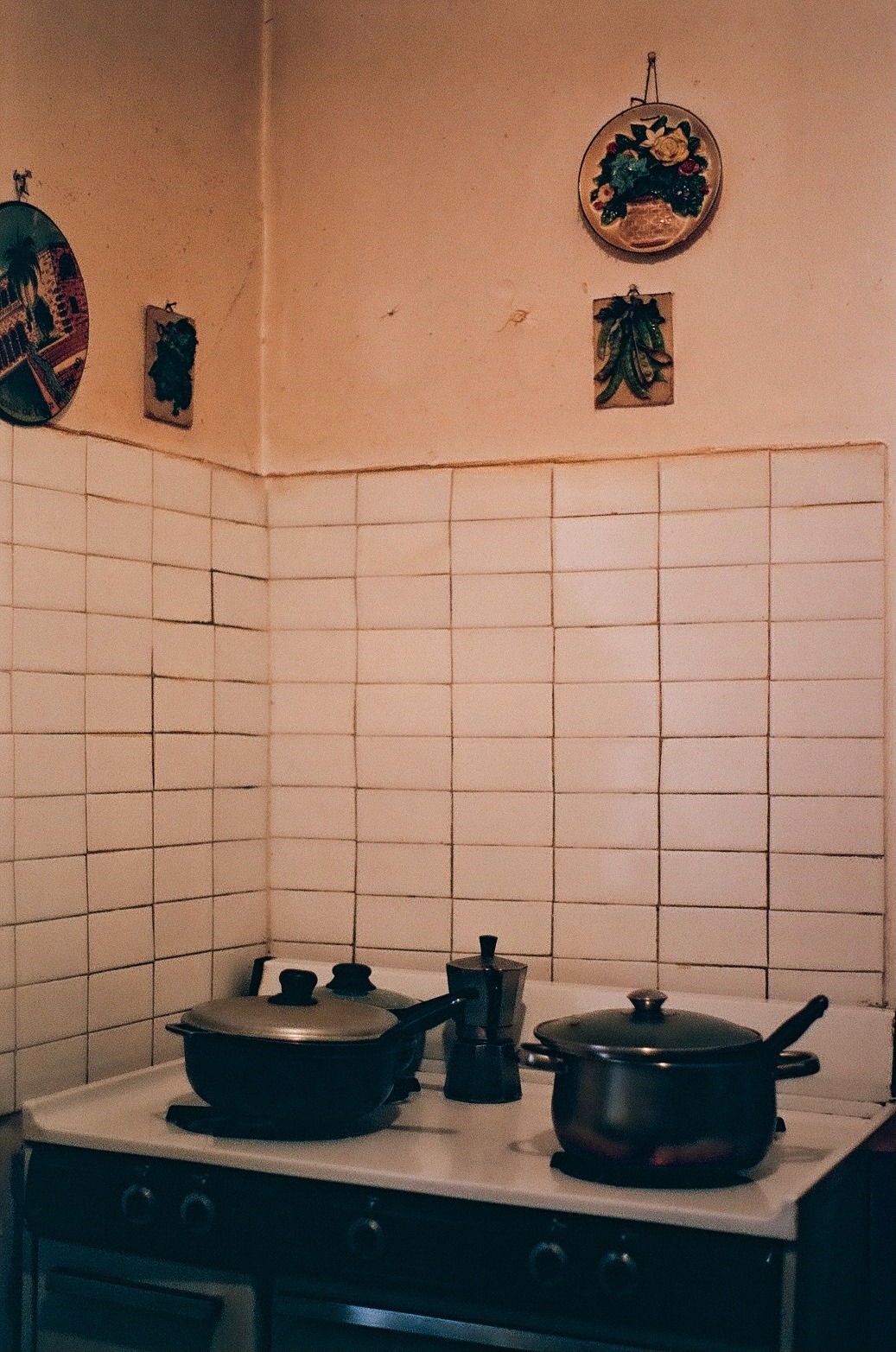
During month-long stays in Port Antonio, Jamaica, as a child, I really learned to create with whatever was around me, and that you don't need much to create. I witnessed both my fraternal grandparents create gathering spaces for so many members of the local neighborhood through dinners, lunches on the beach, church services, and link-ups at my uncle's or aunt's house nearby in Fairy Hill. Just the act of showing up for those they cared deeply for and for strangers who shared the neighborhood with them, my grandparents also made it a point to support people in ways they could: helping them find work, giving them food, money, and, at times, a place to stay. In many ways, my grandparents showed me how to really support community while leaning into the mediums they are in alignment with. My grandmother is an artist in the kitchen, blending flavors that showcase the significance of Jamaican delicacies, and her tender hands create meals that not only nourish you but also charge you to move.
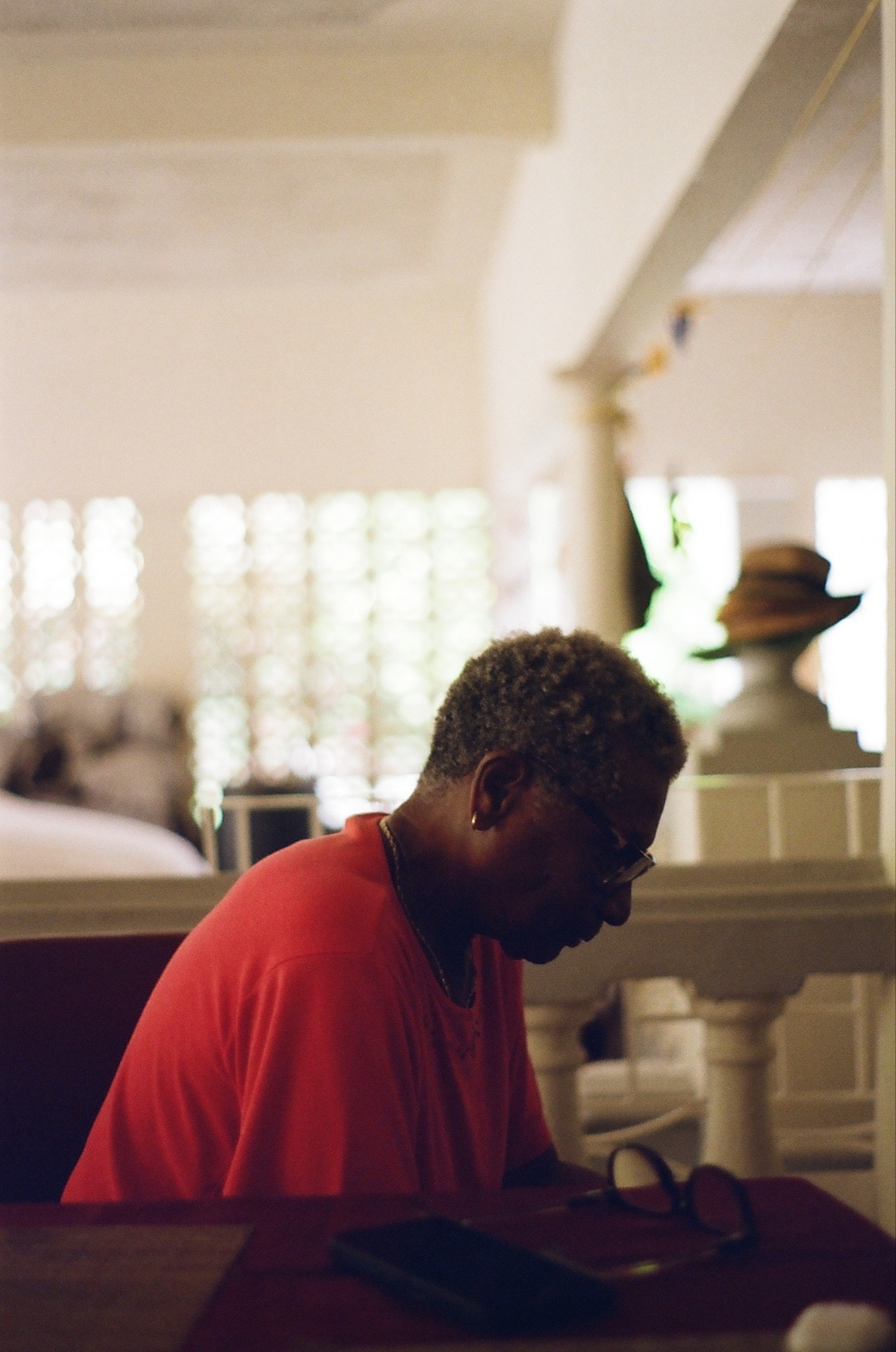
My grandfather, a lump grows in my throat as I type this, his passing still leaves me at odds. My grandfather was a serious man, with the kindest soul and a laugh that tickled your insides. He was the manager at a resort in Port Antonio, JA, called Frenchman's Cove, and also ran the beach kitchen that he and my grandmother created together.
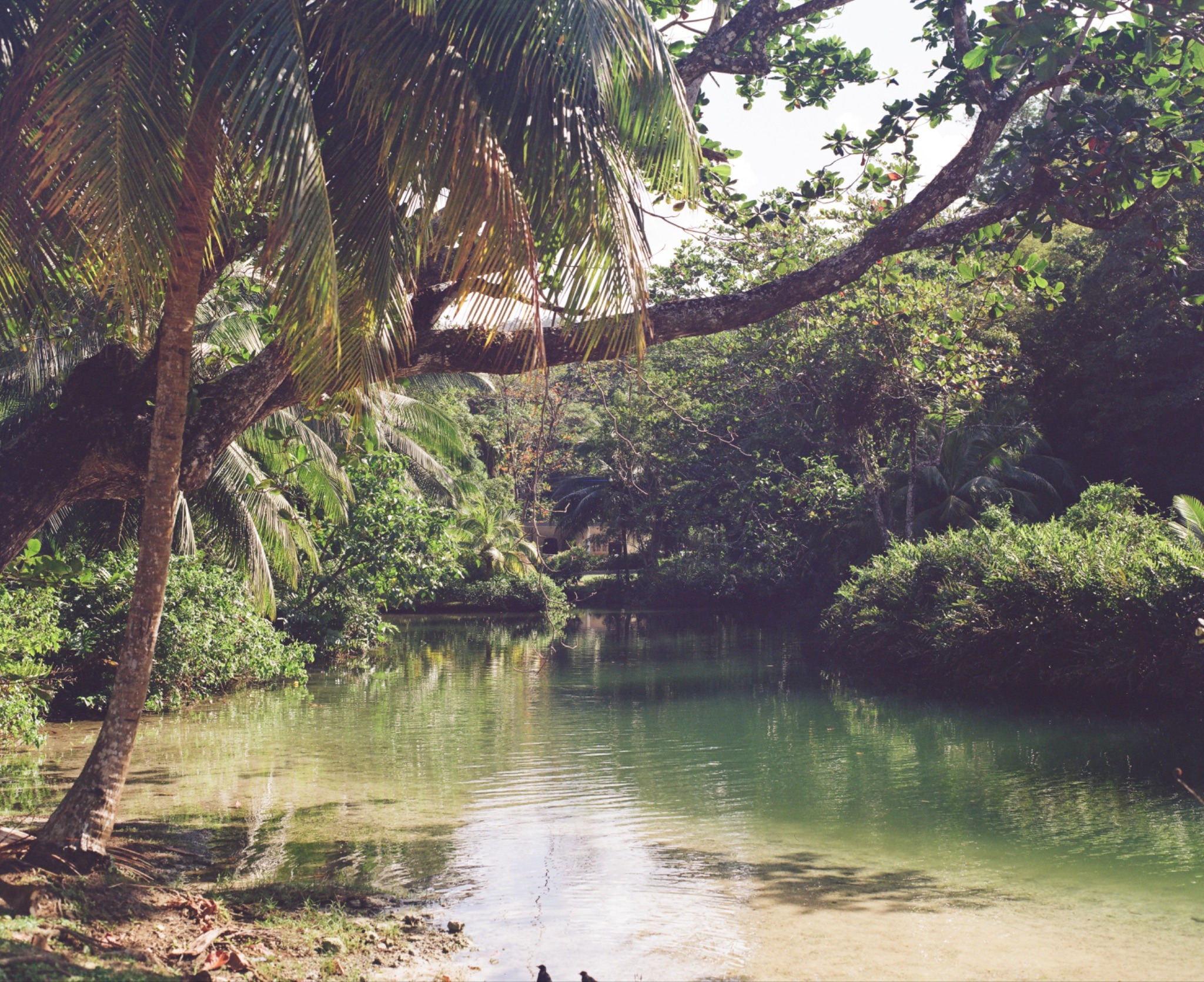
Frenchman's Cove is where my photographic journey began. The constant yearn to document a landscape where I experienced my first cold plunge, swam in the river for the first time, where I've almost drowned several times, where I spent most of my time alone speaking to myself, to God, and whoever listened. It's the place I always go to in my mind whenever I meditate or am at my most peaceful.
Even as I reflect on my curatorial journey, I remember my grandmother as one of the first curators I knew. The way she blended family photos with landscape paintings, and how the colors echoed in the surrounding furniture that we weren't allowed to really sit on, showed me how my aspects of life and home can intersect. It also reminded me how the home is the first gallery we know. Within my curatorial and photographic practices, I am constantly discovering how we create aspects of home and vulnerability with those we cross paths with and in the spaces we take up. Still, I am constantly questioning how we can archive these experiences, that feeling of home and vulnerability we share.
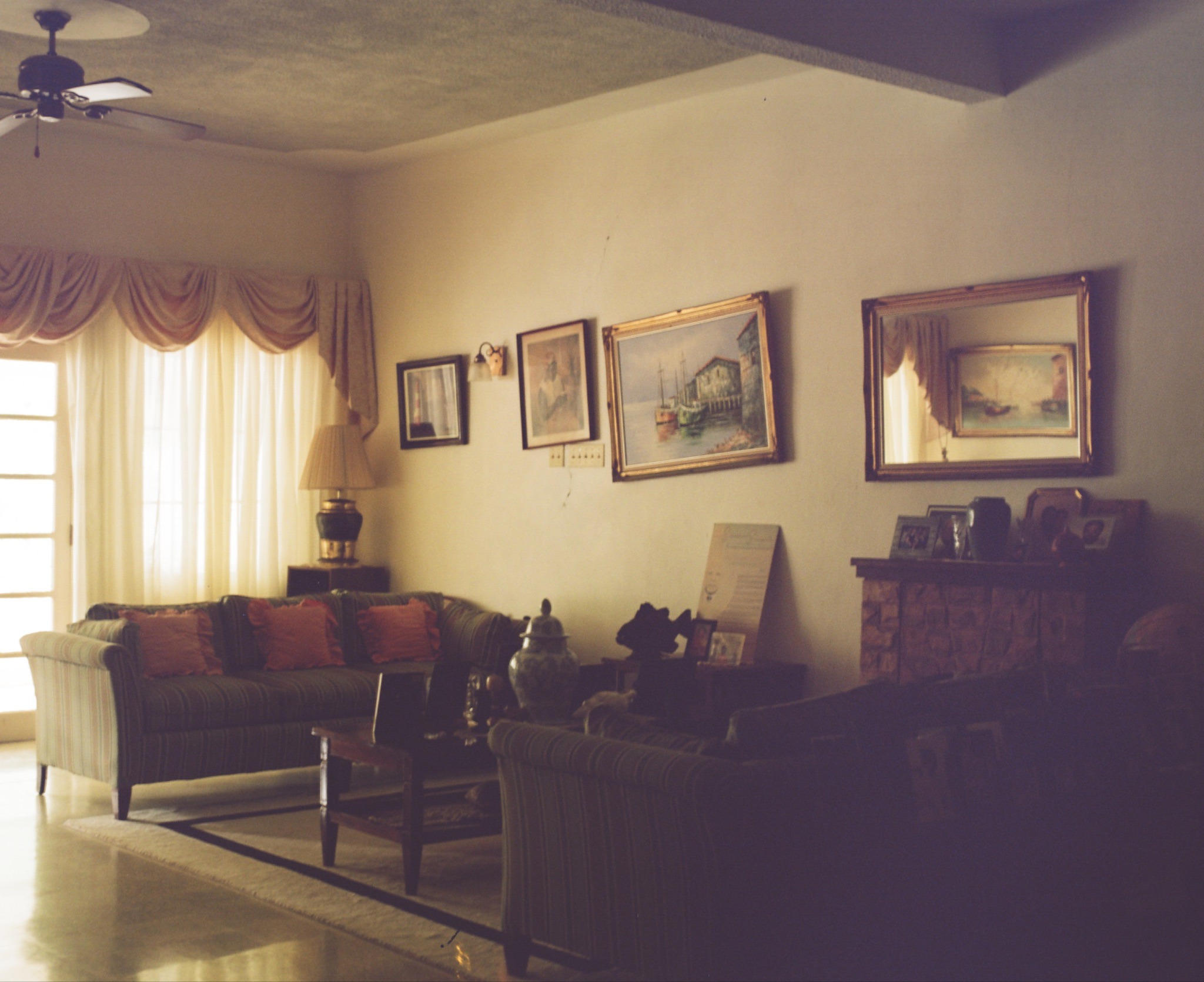
Documenting Jamaica then and now anchors my mission of approaching photography through a care-conscious lens, guided by a commitment to documenting and memorializing the people and spaces with whom I build tender, sustained connections. It also reminds me what a blessing it is to share ties to this island full of people who grow from tough love, sharp tongues, and full hearts. My grandparents indirectly showed me how I can lean on my tool, my camera, to connect further with people and myself. They've also indirectly shown me how curating can be a tool to connect with people and really support those in my community.
Time with my family in the Dominican Republic and learning about our ancestry there reminded me of the importance of archiving our familial experiences in the Caribbean to preserve language. I say this as someone of Dominican heritage who doesn't speak Spanish fluently, which aids in feeling like an outsider in spaces that hold so much of my family history. How can we still connect to parts of our ancestry and family memories when so much of it is the preservation of a language you don't fully speak or understand? Taking the time each day to embed this language into my everyday language has aided my understanding of the many branches of my identity and of how, through art-making and archiving, it can bring us closer to our history and function as memory work.
During my childhood, the categorization of my blackness according to what aspects of my identity fit stereotypical narratives drove me to lean on photography and writing as a means of unlayering and further understanding my shared Caribbean identities. These mediums allow me to celebrate and see people through a care-conscious lens. Seeping into my curatorial practice, I focus on the multiple ways that intersectional practitioners reflect on memories to inform their work and create conversations that speak to home, culture, and vulnerability.
The sea that binds the Caribbean and Miami has always grounded and carried me into the many homes my family has created. Swimming through memories, constantly reminding myself of the importance of creating space for others to take up, as my ancestors have for me, remains the mission.
– Lauryn Lawrence, Artist, Writer, Curator, Pisces